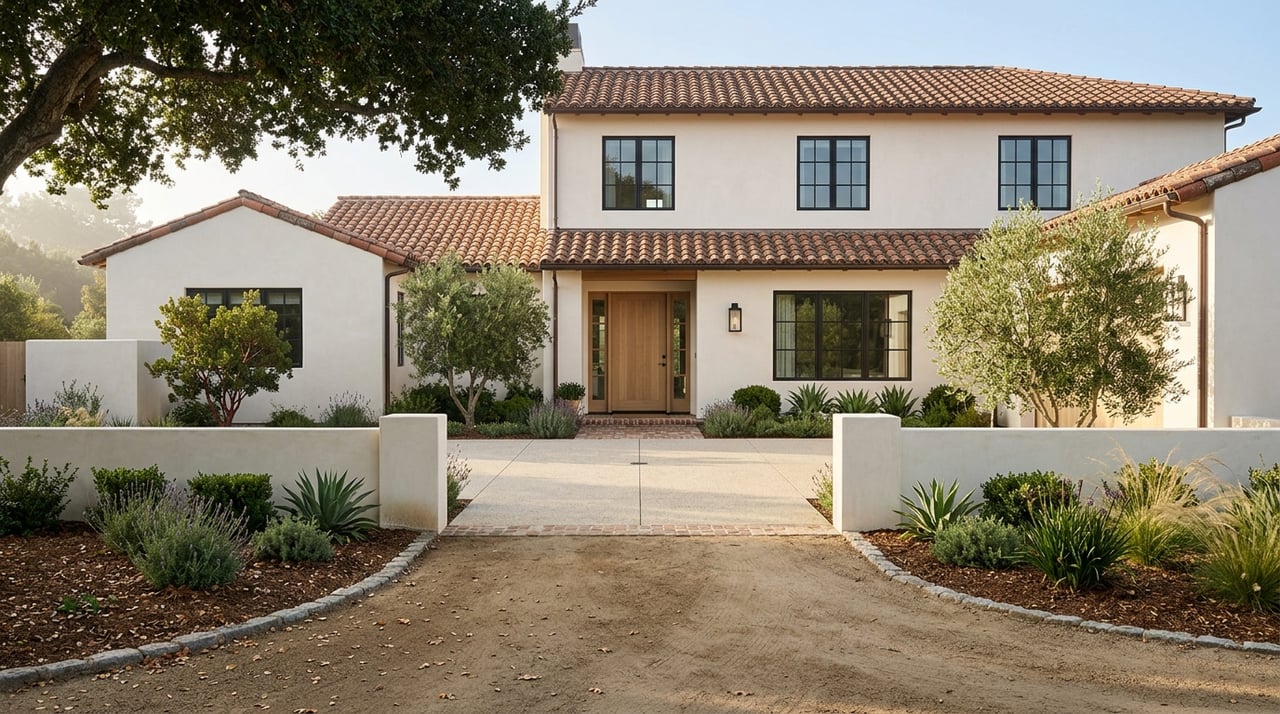
Choosing Rancho Santa Fe vs Coastal Estate Living
April 16, 2026
April 16, 2026
If you are deciding between Rancho Santa Fe and the coast for estate living, you are really choosing between two very different ways to live. One offers land, privacy, and a country-residential setting. The other offers beach access, walkable districts, and a more public, amenity-rich daily rhythm. This guide will help you compare the trade-offs clearly so you can focus on the lifestyle that fits you best. Let’s dive in.
Rancho Santa Fe is best understood as a preserved country-residential community, not a beach town. According to the Rancho Santa Fe Association, the Covenant was created to preserve the rural landscape and future architecture, and it oversees land-use rules on about 1,930 private and commercial properties.
That structure shapes the feel of daily life. The historic community spans roughly 10 square miles, or 6,730 acres, has around 4,300 residents, and is defined by low-density development with an average lot size of more than two acres. If you want separation between homes and a more estate-oriented setting, Rancho Santa Fe stands apart.
The community also includes features that support that lifestyle in a very intentional way. The Association notes that Rancho Santa Fe has a full-time private security patrol and is also served by the San Diego County Sheriff’s Department and the California Highway Patrol.
For many buyers, the biggest draw is simple: space. Rancho Santa Fe offers a setting where acreage, mature landscaping, and distance between homes are part of the fabric of the community rather than rare exceptions.
That difference matters if you value a quieter day-to-day experience. Compared with more compact coastal communities, Rancho Santa Fe is designed around privacy first, with land-use controls that help preserve that character over time.
Estate living here is also tied to a private, club-centered amenity pattern. The Covenant includes nearly 60 miles of private equestrian and pedestrian trails, the Rancho Santa Fe Golf Club and Tennis Club, 68 acres of Arroyo open space, and Osuna Ranch.
Those amenities are woven into the community rather than concentrated in a busy downtown. If your ideal day includes trails, golf, tennis, or open space instead of walking to a beach café, that distinction can be meaningful.
In Rancho Santa Fe, equestrian living is not a niche feature. It is part of the area’s identity.
The Rancho Riding Club has served riders since 1946, sits on 11 acres in the Covenant, and the Association says it maintains nearly 50 miles of equestrian trails for members and guests. For buyers who plan to ride regularly or want horse-friendly infrastructure close to home, Rancho Santa Fe offers a setup the coast generally does not.
When buyers compare Rancho Santa Fe to the coast, they are often looking at Del Mar, Encinitas, or La Jolla. Each offers luxury living, but each does so in a more beach-connected, village-oriented environment.
The biggest shift is not just proximity to the ocean. It is the pace and pattern of everyday life. Coastal communities tend to offer easier access to beaches, shops, restaurants, and civic activity, but they also bring more public activity, less land, and a denser setting.
Del Mar is the closest direct contrast for buyers who want both luxury and the ocean. The city describes itself as a walkable seaside village with about 4,500 residents in 2.1 square miles and more than 2 million annual visitors. Its Village Center is pedestrian-oriented, and the city highlights more than two miles of sandy beach and shoreline access.
If you want to be able to enjoy restaurants, beach walks, and village activity without driving far, Del Mar offers that convenience in a compact footprint. The trade-off is that the setting is more public and more active than Rancho Santa Fe.
Encinitas offers a broader and more varied coastal experience. The city says it stretches along six miles of Pacific coastline and includes Old Encinitas, Cardiff-by-the-Sea, Leucadia, Olivenhain, and New Encinitas. It also highlights a vibrant downtown business district.
Downtown 101 is described as a coastal shopping district with historic architecture, sidewalk cafés, specialty retail, and restaurants. The city also points to multiple beach access points, including Moonlight, Swami’s, Beacon’s, and Grandview, as well as walking routes that connect the beach and Old Encinitas.
La Jolla combines ocean frontage, village amenities, and established luxury density. The City of San Diego’s La Jolla community profile describes the area as defined by rugged coastline, ocean bluffs, and beaches, with activity centered around the Village, the Shores, and Bird Rock commercial districts.
La Jolla covers about 5,718 acres and is about 99 percent built out, which means growth primarily happens through infill development. If you want a luxury coastal environment with established commercial districts and strong beach access, La Jolla offers that. If you want larger lots and a less urbanized feel, Rancho Santa Fe is usually the stronger match.
The right choice usually comes down to a few lifestyle priorities. Here is where the comparison becomes most useful.
If you want estate-scale privacy, Rancho Santa Fe is the stronger fit. Its large-lot character, covenant controls, and low-density layout are built around separation and preservation.
If you want spontaneity, the coast has the edge. In Del Mar, Encinitas, and La Jolla, it is easier to fit beach time, dining, and errands into the natural flow of your day.
If horses, trails, and equestrian amenities are central to your lifestyle, Rancho Santa Fe is hard to replicate. The Riding Club, Osuna Ranch, and private trail network are part of the community’s infrastructure, not occasional extras.
On the coast, beach access often replaces horse-friendly acreage as the defining lifestyle feature. That is not better or worse. It simply depends on what you will actually use.
Rancho Santa Fe has a more private and residential rhythm. Amenities are present, but they are not organized around a public-facing town center in the same way they are in coastal communities.
By contrast, coastal living often means more street activity, more visitors, and more day-to-day energy. Del Mar in particular reports more than 2 million annual visitors, which helps explain why parking and public activity are part of the local experience.
Many buyers also weigh how they plan to use the home. Based on the structure of these communities, buyers seeking a full-time estate environment often gravitate toward Rancho Santa Fe.
Buyers looking for a more weekend-friendly ownership pattern often lean coastal, especially if they want easier access to restaurants, beaches, and walkable districts. For some, that convenience supports a lock-and-leave lifestyle more naturally.
School structure is another place where broad assumptions can be misleading. In Rancho Santa Fe, the Rancho Santa Fe School District operates two schools on one site for grades K-5 and 6-8.
For high school, residents in the Rancho Santa Fe School District attendance area generally attend Torrey Pines High School, with an exception for the area north of Escondido Creek that feeds La Costa Canyon High School. That is a helpful reminder that in this area, address-specific boundaries matter as much as the community name.
The same principle applies when comparing Del Mar, Encinitas, and La Jolla. Public-school pathways differ by district and by location, so if school assignment matters to you, it is worth verifying each property carefully during your search.
If you are still deciding, start with a few practical questions:
For many buyers, the answer becomes clear once they focus on daily patterns instead of broad labels. Estate living in Rancho Santa Fe is about space, preservation, and a more private lifestyle. Estate living on the coast is about access, energy, and being closer to the shoreline and village centers.
If you are weighing Rancho Santa Fe against Del Mar, Encinitas, or La Jolla, working with a team that understands both estate properties and coastal micro-markets can make the decision much clearer. For tailored guidance on luxury estates, covenant properties, and coastal homes in North County San Diego, connect with Kathleen Gelich.
Stay up to date on the latest real estate trends.
We are dedicated to helping you find your dream home and assisting with any selling needs you may have. Contact us today to start your home searching journey!