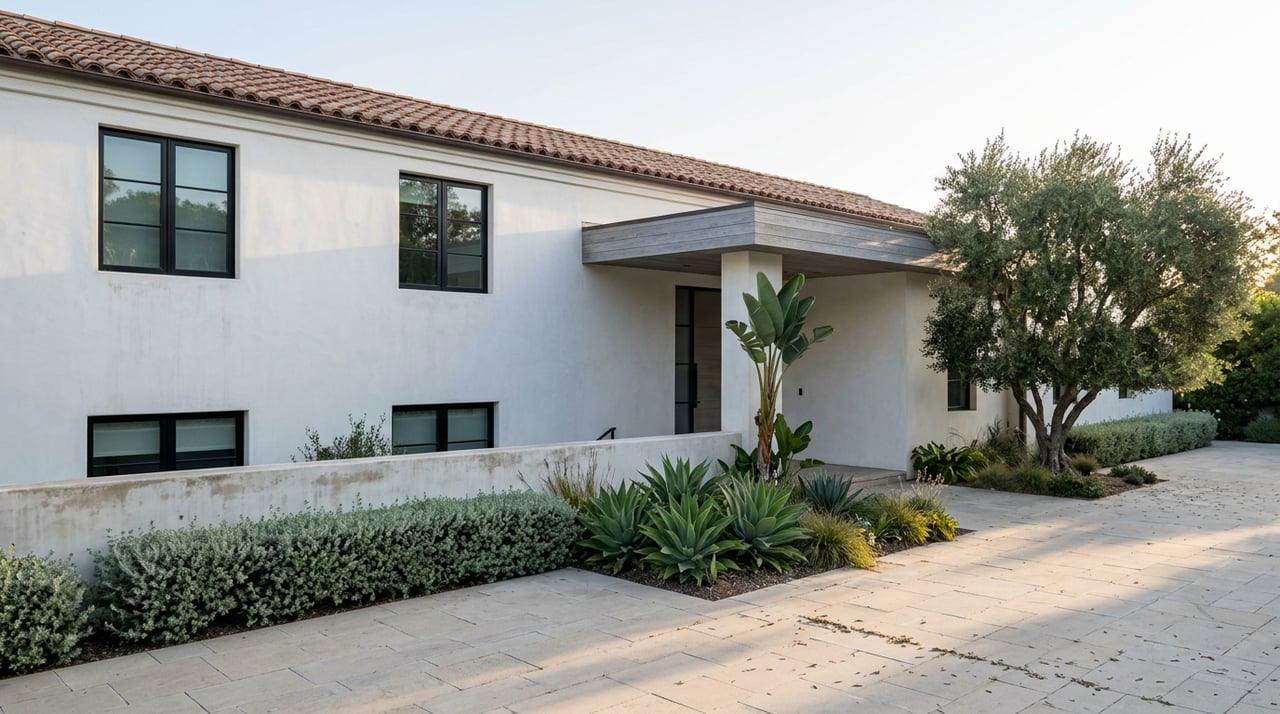
In Carlsbad, the Same Price Doesn't Buy the Same Tax Bill
September 10, 2026
September 10, 2026
Why would a $1.5 million home in La Costa Oaks cost its owner more each month than a $1.7 million home two miles away in Olde Carlsbad?
The answer isn't the mortgage. It's a line item that shows up on the county tax bill and nowhere on the listing sheet's headline number: Mello-Roos. Carlsbad's median sale price sat near $1.6 million over the three months ending in June 2026, a figure that blends homes carrying no special assessments with homes carrying thousands of dollars a year in bond-backed taxes their owners never see coming until escrow. The median tells you what the market paid. It says nothing about which decade of infrastructure financing you're inheriting.
Two buyers touring Carlsbad on the same Saturday could walk through homes priced within $50,000 of each other and sign up for entirely different fixed costs. One is in Olde Carlsbad, a neighborhood that predates the city's master-planned building boom, where most homes carry no HOA and no special tax district at all. The other is in La Costa Oaks, built between 2004 and roughly 2014, where a homeowners association fee of $220 to $280 a month runs alongside a Mello-Roos special tax that can add $1,500 to $3,500 or more annually. That second number doesn't show up in the asking price. It shows up on the county secured property tax bill, as its own line, months after the offer is accepted.
This isn't a defect. It's a financing structure, and understanding why it exists changes how you compare Carlsbad's neighborhoods against each other.
Proposition 13 capped California's general property tax at 1% of assessed value and limited annual increases to 2%, a real protection for existing owners but a real problem for cities trying to fund roads, sewers, and parks for land that hadn't been built out yet. The Mello-Roos Community Facilities Act of 1982 gave cities and school districts a workaround: form a Community Facilities District, sell bonds to pay for the infrastructure up front, and repay those bonds through a special tax charged only to the parcels inside that district.
The result is a tax that is geographic, not universal. If your parcel sits inside a CFD boundary, you pay. If it doesn't, you don't. That single fact explains why Carlsbad's oldest neighborhoods and its newest master plans can carry such different total tax pictures on homes of similar value.
| Neighborhood | Built | Typical HOA | Mello-Roos Status |
|---|---|---|---|
| Olde Carlsbad / Carlsbad Village | Pre-1980s | Mostly $0 (some condos) | None |
| Old La Costa (Rancho La Costa) | 1960s to 1980s | $0 | None |
| La Costa Valley | 1998 to 2002 | ~$125/month | Oldest bonds in the La Costa villages, 2025 to 2030 payoff window |
| La Costa Greens | 2003 to 2010 | ~$250+/month | Active CFD |
| La Costa Oaks | 2004 to 2012/2014 | $220 to $280/month | Active CFD, roughly $1,500 to $3,500+/year |
| La Costa Ridge | 2006 to 2014 | $300+/month | Active CFD |
| Bressi Ranch, Robertson Ranch, Calavera Hills, The Foothills at Carlsbad | Various, newer master plans | Varies | Active CFD |
The pattern holds across the county too. Effective property tax rates in CFD-heavy zip codes can reach 1.5% to 1.7% of purchase price when the special tax is layered on, compared with roughly 1.06% to 1.25% in areas without one.
Here's the part that surprises buyers who assume newer construction means a heavier tax burden. Among La Costa's four master-planned villages, La Costa Valley was built first, between 1998 and 2002, which makes its bonds the oldest of the group and puts them in a 2025 to 2030 window for approaching payoff. La Costa Ridge and La Costa Oaks came later, built out through 2014, which means their special tax obligations have more years left on the clock. A home in La Costa Valley today may be sitting inside that final payoff stretch right now, in 2026, while a home in La Costa Ridge, built a decade later and possibly priced lower, still owes a decade or more of payments.
Bond terms for these districts commonly run 20 to 40 years from formation, with the tax capable of rising up to 2% a year until the underlying debt is retired. That means the honest question isn't "is this home newer or older." It's "how many years are left on this specific parcel's bond," and that number lives in the CFD's formation documents, not in the listing description.
Run the arithmetic on a representative example. A $3,600 annual Mello-Roos assessment adds $300 to your monthly housing cost, the same way a mortgage payment or HOA due does, and it counts against your qualifying ratio the same way. Layer that on top of a $250 monthly HOA fee common in La Costa Greens or Oaks, and a buyer is carrying $550 a month beyond the mortgage before insurance or maintenance enter the picture. A buyer in Olde Carlsbad or Old La Costa, choosing a home with no HOA and no CFD, carries none of it.
A Mello-Roos line item isn't decoration on the tax bill. It's the remaining balance on infrastructure the neighborhood already used to sell you the home, and it's still being paid down whether or not you asked about it before you wrote the offer.
There's a tax-planning wrinkle worth a mention, not as advice but as a fact to raise with your own advisor. The federal SALT deduction cap rose to $40,000 for 2026, which may let more California homeowners capture a portion of their property tax burden on paper. Whether any part of a specific Mello-Roos assessment qualifies depends on what it funds and how the CFD's documents describe it, and that determination belongs to a tax professional working from your actual bill, not a blog post.
The fix isn't complicated, but it has to happen before the contingency period starts, not during it.
The San Diego County Assessor maintains a public lookup for active Mello-Roos districts by parcel number, and it's the fastest way to confirm what a specific address actually owes before you get emotionally attached to it.
Does Mello-Roos ever go away? Yes. The tax ends when the underlying bonds are paid off, typically 20 to 40 years from the district's formation. La Costa Valley's bonds, formed between 1998 and 2002, are the closest among the La Costa villages to reaching that point, with a payoff window that industry estimates place between 2025 and 2030.
Is Mello-Roos the same as an HOA fee? No. HOA dues are a private assessment for community maintenance and amenities, billed monthly. Mello-Roos is a public special tax tied to bond repayment, billed with your county property tax bill, and it functions as a lien on the property.
Can the amount increase after I buy? Most CFDs allow escalation up to 2% a year, mirroring the cap on standard property tax growth under Proposition 13, though the exact formula is set in that district's formation documents and should be confirmed rather than assumed.
Does a Mello-Roos assessment affect resale? It's priced into the market the way any recurring cost is. Buyers comparing a CFD community against a CFD-free one are, whether they realize it or not, already weighing the trade-off between newer construction and a lower ongoing tax bill.
Carlsbad's neighborhoods don't reveal their true cost on the listing sheet. Figuring out which decade's infrastructure bill comes with a specific address takes a parcel-level check, not a citywide average. If you're comparing homes across Olde Carlsbad, the La Costa villages, or Carlsbad's newer master plans and want the real numbers before you write an offer, Kathleen Gelcich can help you request a private home valuation that accounts for what the tax bill actually says, not just what the median implies.
Stay up to date on the latest real estate trends.

We are dedicated to helping you find your dream home and assisting with any selling needs you may have. Contact us today to start your home searching journey!